
Blog · Blog
A Vegetable Garden for Children
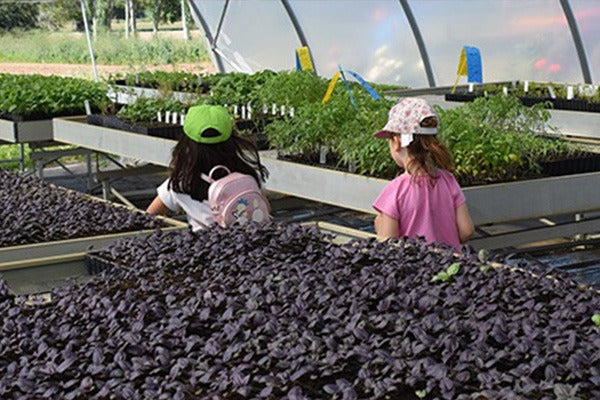
Children have a natural urge to touch things, dig in the soil and make discoveries. Let's make the most of this and let them burn off some energy.
With this activity we can engage with children in a variety of ways:
Motor skills: working with garden tools (hoe, rake, dibber, etc.) and hitting the right spot;
Fine motor skills: picking seeds out of the packets and placing them in the spots/rows marked out beforehand;
Exercise: bending and stretching arms and legs;
Discipline: putting things in the right order and in the right places;
Maths: sowing a given number of seeds – counting, and even working out the proportions of one variety and another.
For adults it is a process of relearning, rebuilding and simplifying. Spending time with children is very important for creating lasting bonds.
Which crops to choose?
Choose crops that grow quickly and are easy to sow.
The seeds should be a suitable size for the child; this works on fine motor skills and the child's enjoyment of the different seed shapes.
The crop you choose will depend on how much space you have. If you have a small garden, you will need to choose crops that do not produce lots of leaves and do not spread much across the ground.
How to grow?
To germinate, seeds need three essential things:
Soil (earth/compost)
Water
Light
We need to prepare the soil to receive the seeds, have water for watering and a sunny spot for our plants to grow.
Soil
Because seeds are small, delicate living things, they need loose, crumbly soil to receive them. The soil is the seed's bed, and the seed needs to be tucked snugly into it. So, once the soil is nice and loose (using a hoe and then a rake to even it out), we place the seed and cover it with a thin layer of loose soil. To give the root that will grow something to hold on to, we firm the soil lightly.
Water
Water is essential to life.
We need to give the seed just enough water for it to "feel" the water and "decide" that it is time to come up.
How do we know we have given enough water? We water and watch: there should be a thin "film" of water on the surface of the soil.
Do not overwater, or the seed will become waterlogged.
After this first watering, and depending on the weather, we check whether more watering is needed.
How do we know if we need to water again? We put a hand on the soil: if it feels damp, we do not water; if it is completely dry, we water.
Light
The seeds then receive sunlight and start to germinate. Depending on the seed, it can take 3 to 15 days before we see the future plant "pop out of the soil" – come up.
We should not disturb the soil after sowing, so that our plant's root does not break.
Your first vegetable garden
You can make a
At Sementes Vivas we have a wide range of products.